 Netherlands
The Challenge
At a busy front desk, people queue to be checked in while staff log each arrival by hand.
The client needed a kiosk anyone could simply walk up to, that worked without the internet, kept no photos, and could pass privacy, electrical-safety and accessibility reviews.
The hardware also had to be ready for electrical-safety certification: every power part needed a recognised safety mark, and the printed enclosure had to be flame-retardant.
The Solution
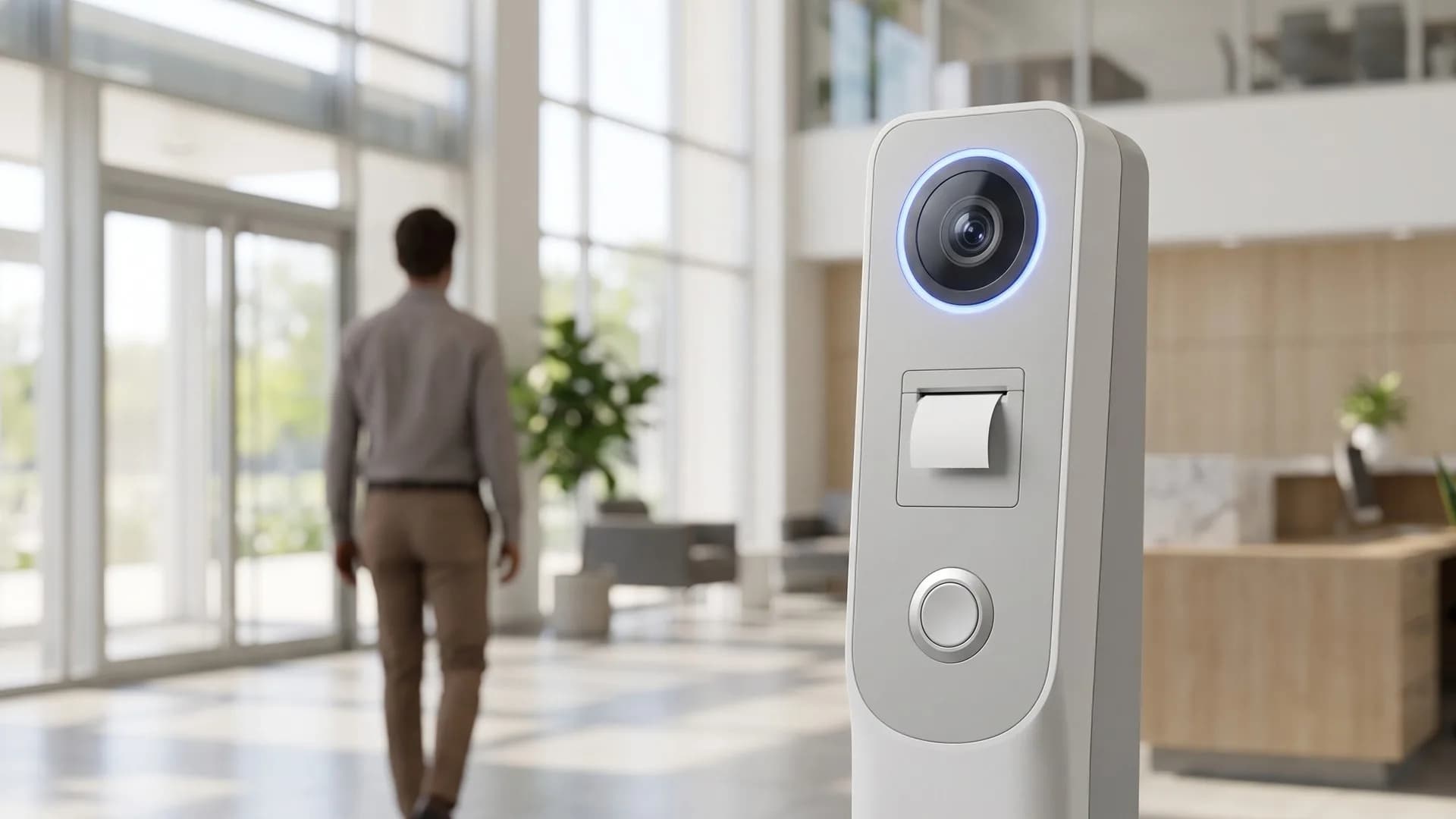
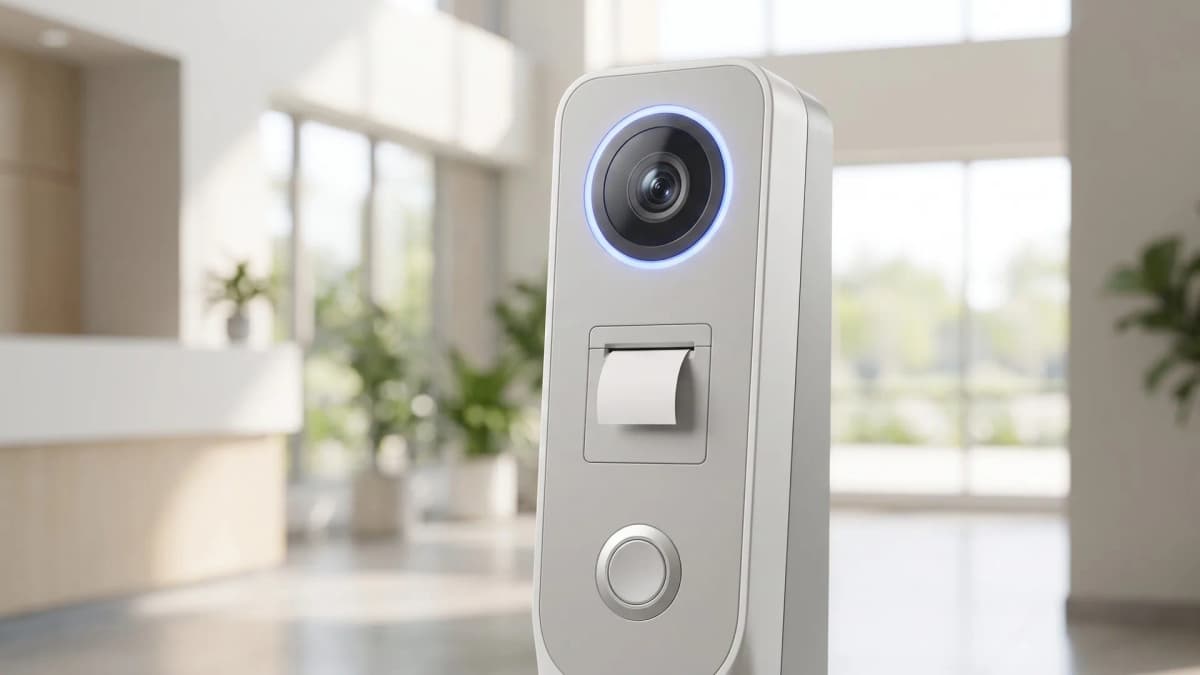
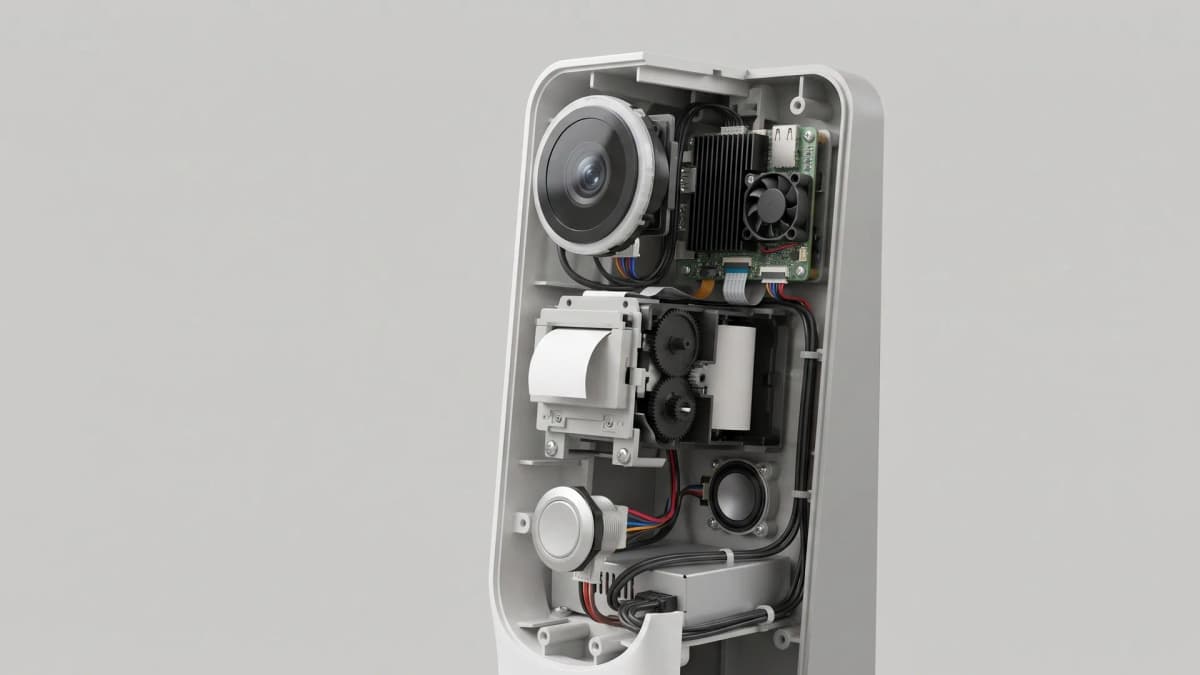
We built the complete kiosk: the enclosure, the AI that recognises enrolled people on the device itself, a slip printer, sound and light cues that guide each person, and a secure web app for front-desk staff.
A person steps up, is recognised, and the kiosk prints their slip and logs the check-in. Nothing leaves the kiosk: images are processed in memory and never saved, and records stay on the device, encrypted.
We engineered for certification from day one: power components chosen only with cULus, CSA or cETL safety marks, a low-voltage DC power circuit bench-tested to the electrical-safety spec, and printed enclosure parts in flame-retardant FR-ABS rated UL94 V-0.
System Architecture
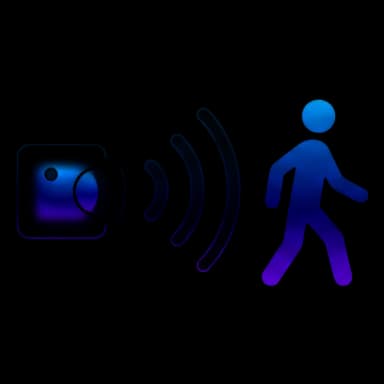
- Step 1Walk upA distance sensor, not a camera, wakes the kiosk as a person steps into the lane.
- Step 2Recognised on the deviceDetection and matching run on the Jetson in about 30 ms; the frame never leaves memory.
- Step 3Slip printed, check-in loggedThe slip prints on the spot and the encrypted log updates for the front desk.

Under the hood
- NVIDIA Jetson running TensorRT engines compiled on each unit for its own GPU
- About 30 ms per person on the device: face detection ~26 ms + embedding ~4 ms
- 155° wide-angle camera, fisheye-calibrated so detection sees straight lines
- Templates refresh only on high-confidence matches, rate-limited per person
- Printed enclosure in flame-retardant FR-ABS rated UL94 V-0
- Power parts only with cULus, CSA or cETL safety marks
- Low-voltage DC power circuit bench-tested to the electrical-safety spec
- Slip printer, time-of-flight presence sensor, LED ring, speaker, large button
- Ready in under 40 seconds from power-on, with no one logging in
- Software watchdog restarts a stalled service; hardware watchdog reboots on a hang
- Any peripheral can fail without stopping the kiosk
- Events queue offline and sync with retry once the network returns
- Zero image storage: frames processed in memory, then dropped
- Biometric templates encrypted with AES-256-GCM; key kept apart from the data
- Front-desk web app over HTTPS: roles, audit log, bcrypt passwords, idle logout
- No cloud services: recognition, records and admin all run on the kiosk
Hard problems we solved
Key Capabilities
- Walk-up check-in: no card, no keypad
- Slip printed on the spot
- Check-out button for people leaving
- Duplicate check-ins flagged
- Front-desk web app
- Works without internet




Impact
- Delivered to a client in the Netherlands, who reports it is working very well
- Recognises an enrolled person in about 30 ms, on the device
- Stores no photos and sends nothing to the cloud
- Delivered with a compliance package for privacy, electrical-safety and accessibility reviews