The Challenge
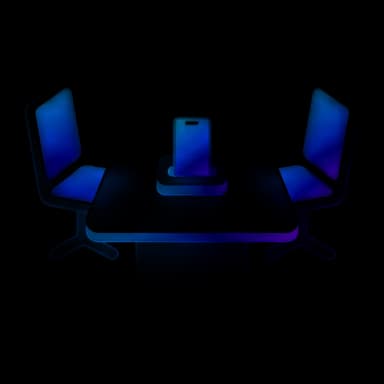
Every phone on a meeting table can record. In a board discussion, a client consultation or an HR or medical conversation, one tap starts an audio or video recording, and an app can switch on the microphone or camera without the owner noticing. Asking visitors to leave their phones outside feels rude; letting the phones stay on the table puts the conversation at risk.
A good answer had to be polite: something a host offers guests, like checking in a coat, not a demand. It had to stop audio and video capture together, because covering only the microphone or only the cameras still leaves a recording possible. It could not harm the phone, block calls, mobile signals or Wi-Fi, or affect any phone that was not placed on it. And it had to work on a table with no socket nearby, and charge the phone so guests have no reason to take it back early.
The Solution
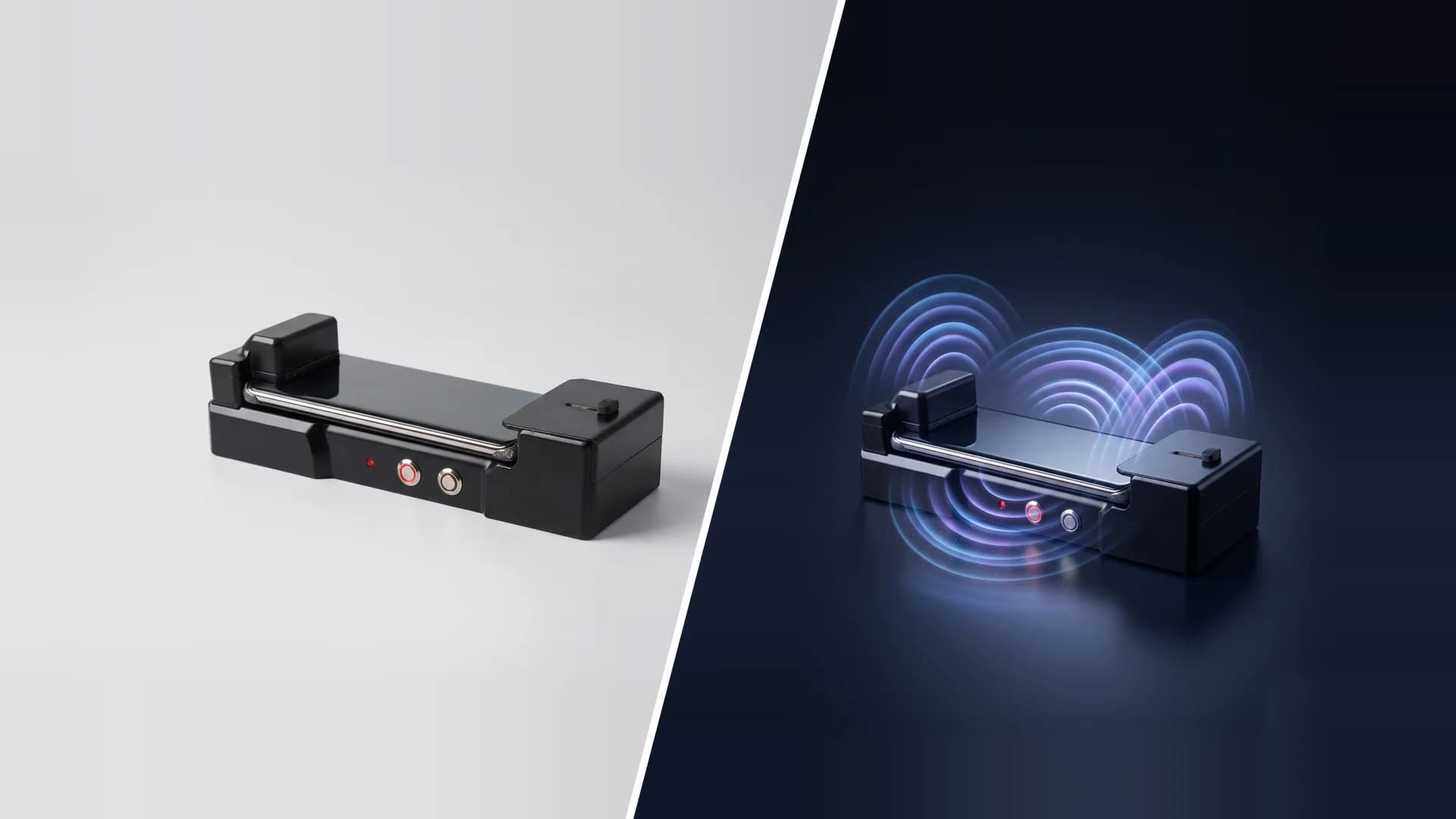
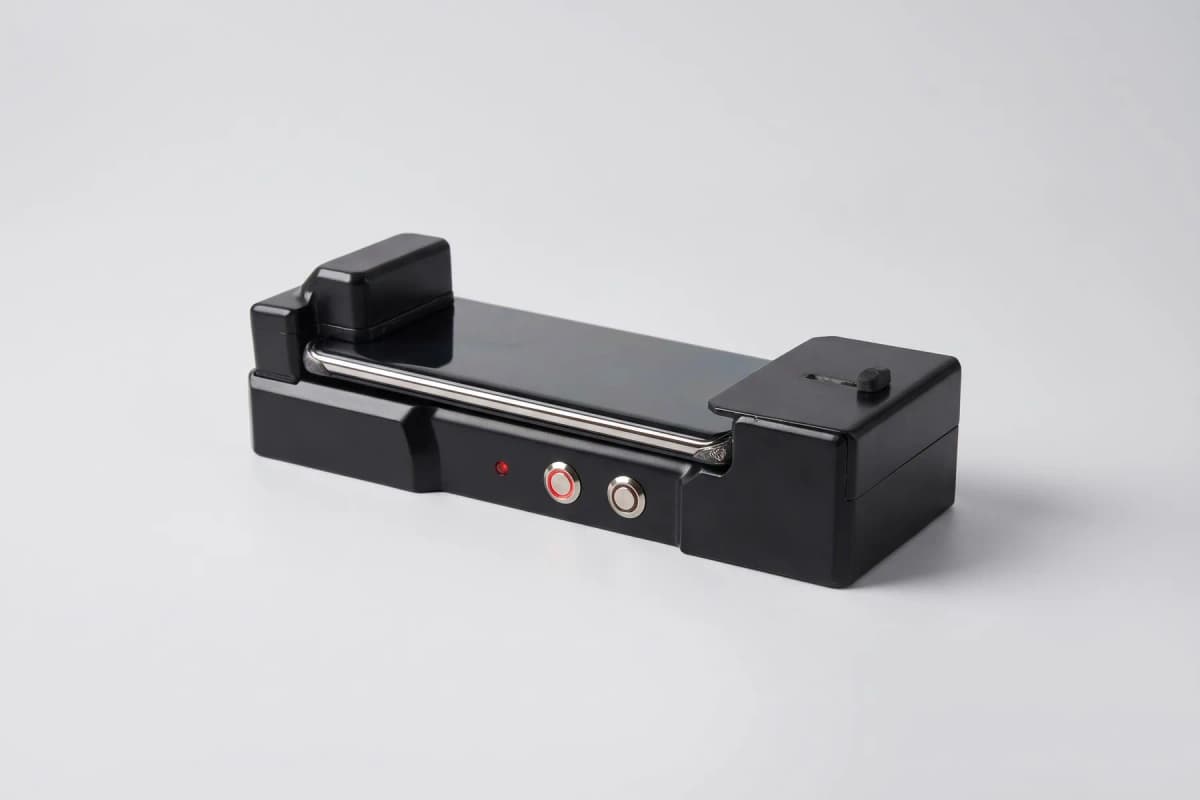
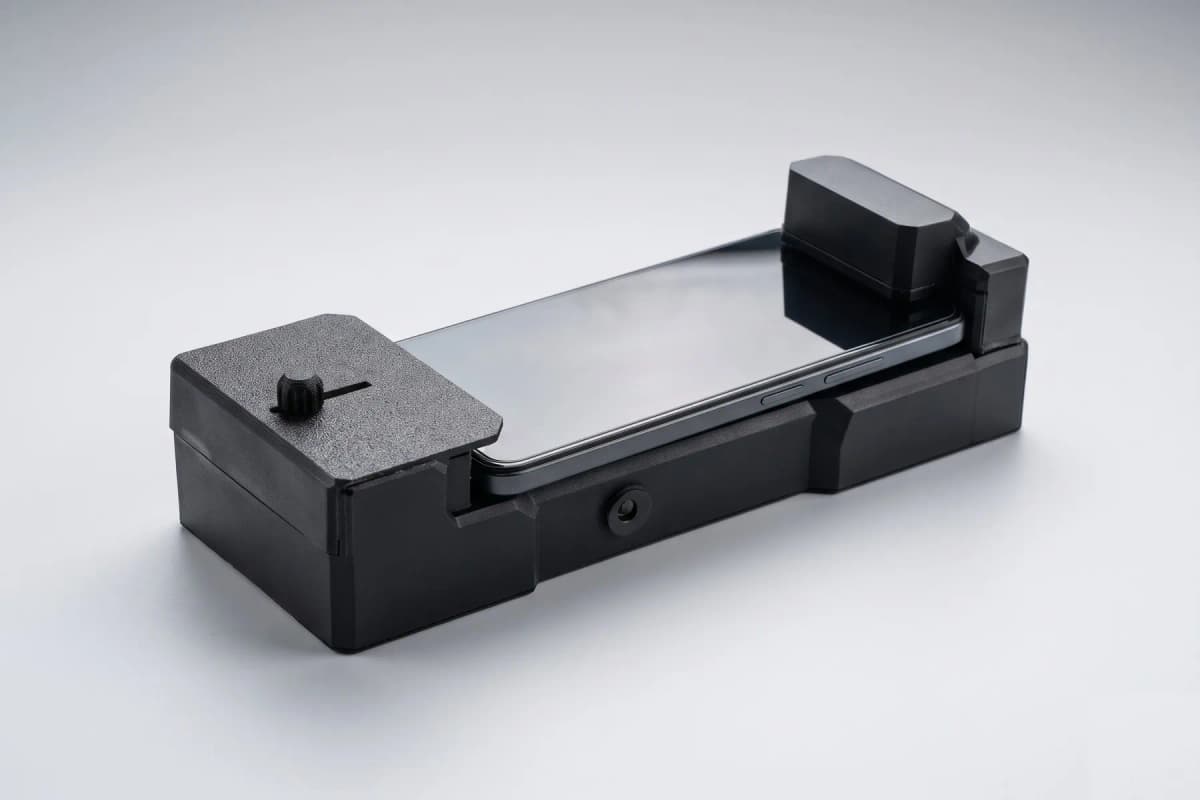
Guardian Dock gives each phone a place to rest during a private conversation. With the phone on the dock and Privacy Mode on, piezoelectric transducers at the top, bottom, front and back surround it with inaudible ultrasonic sound that keeps shifting in frequency. This ultrasonic microphone masking leaves the phone's microphones picking up only noise, so the phone can't make a usable recording. Non-adhesive covers slide across the front and rear cameras, and a Qi-compatible coil charges the phone at up to 15 W. The effect stays with the docked phone: calls, mobile signals and Wi-Fi keep working, other phones in the room are not affected, and the phone itself is not harmed.
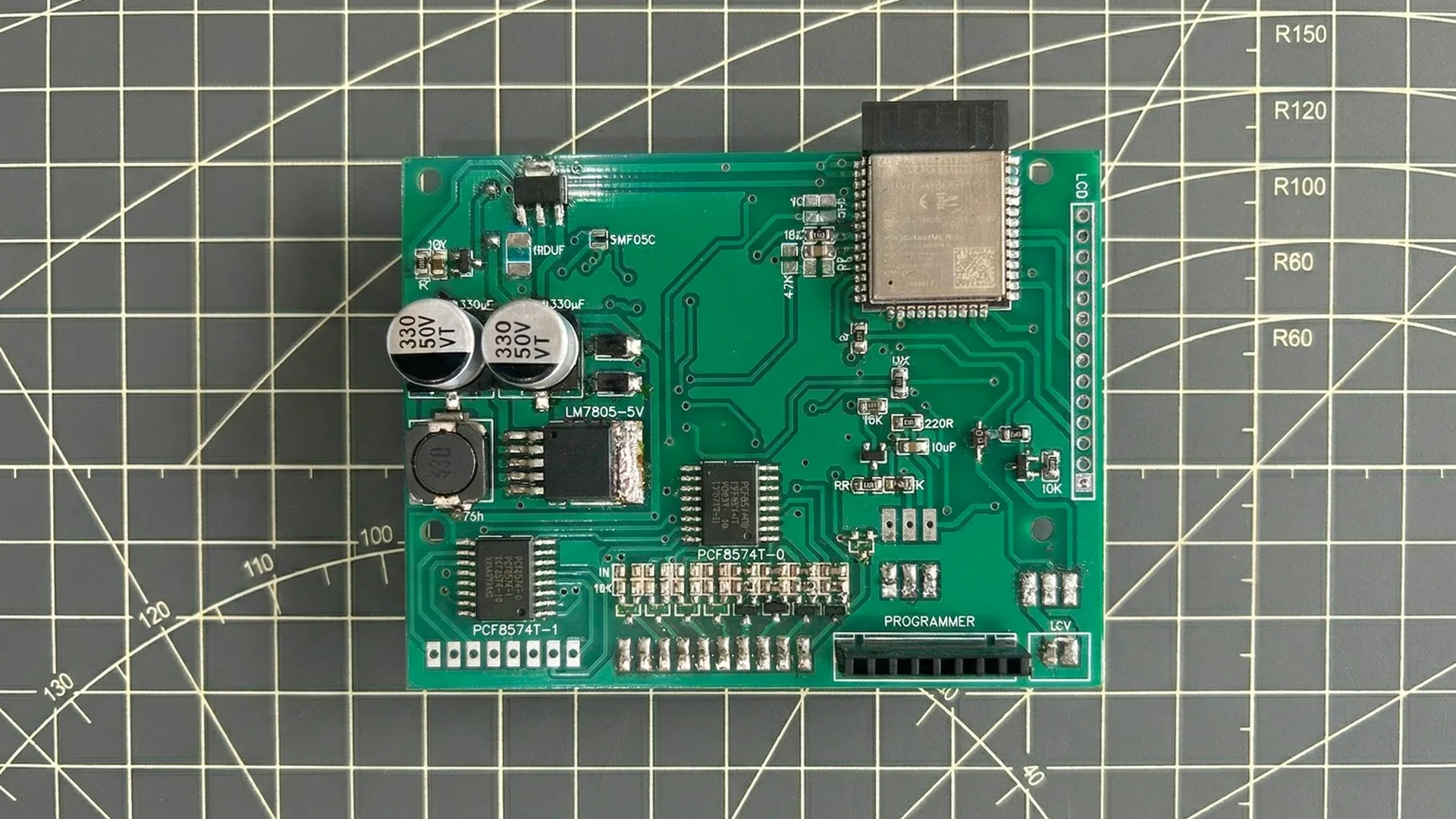
Inside, a low-power AVR microcontroller sends frequency commands over SPI to a direct digital synthesis (DDS) waveform generator and runs a pseudo-random sweep, so the signal never settles on a single fixed tone that a phone's adaptive noise suppression could filter out. The square-wave output is buffered and fed to a Class-D amplifier, which drives the transducers through impedance-matching output stages. Wireless charging is a separate subsystem with its own switch, isolated from the ultrasonic electronics. A 6000 mAh Li-Po battery and power-management IC supply regulated 3.3 V and 5 V rails with over-voltage, under-voltage and thermal protection, and a DC barrel jack with pass-through lets the dock run while it recharges.
System Architecture
- Step 1PlacePut the phone on the dock and slide the covers across its front and rear cameras.
- Step 2ActivatePress Privacy Mode to start ultrasonic microphone masking; an LED confirms it is on.
- Step 3ConverseThe phone stays parked and charging, and it can't make a usable recording.

Under the hood
- AVR microcontroller sends digital control words to a DDS waveform generator over SPI
- Pseudo-random sweep between about 39 and 41 kHz, starting at a random point near 41 kHz
- Step starts near 45 Hz and grows by a random 1–5 Hz each step, so the sweep rate keeps varying
- Low-power parts: 25–40 mW waveform generator, MCU sleep modes down to microamps
- DDS square-wave output is buffered to keep signal integrity into the amplifier
- Class-D amplifier: high efficiency and low heat in a small battery-powered dock
- Output coupling and filtering stages match impedance and protect the transducers
- Piezoelectric transducers at top, bottom, front and back reach single and array MEMS mics
- Transducers work across 20–45 kHz, inaudible to people
- 6000 mAh Li-Po with power-management IC: 3.3 V rail for the MCU, 5 V for DDS and amplifier
- Battery protection against over-voltage, under-voltage and over-temperature
- DC barrel jack with pass-through, so the dock keeps working while it recharges
- Qi-compatible coil and driver up to 15 W, logically separate from the ultrasonic chain
- Independent switches for power, privacy mode and charging; LEDs for mode, charge, battery
Hard problems we solved
Key Capabilities
- Ultrasonic microphone masking from the top, bottom, front and back
- Constantly shifting signal that a phone's noise filtering can't remove
- Sliding covers over the front and rear cameras
- Qi-compatible wireless charging at up to 15 W
- Affects only the docked phone; calls, signals and Wi-Fi keep working
- Up to 4 hours on battery with privacy mode and charging both on

Impact
- Patent application published in India (IN202631006318) on 10 April 2026
- Designed and built in-house by Aeonix: custom PCB, signal firmware and dock enclosure
- One 6000 mAh battery runs privacy mode and wireless charging together for up to 4 hours
- Works with Qi-compatible iPhone and Android phones, with no app to install and nothing for the visitor to set up
- Does not harm the phone: the sound is above human hearing and the camera covers are non-adhesive