
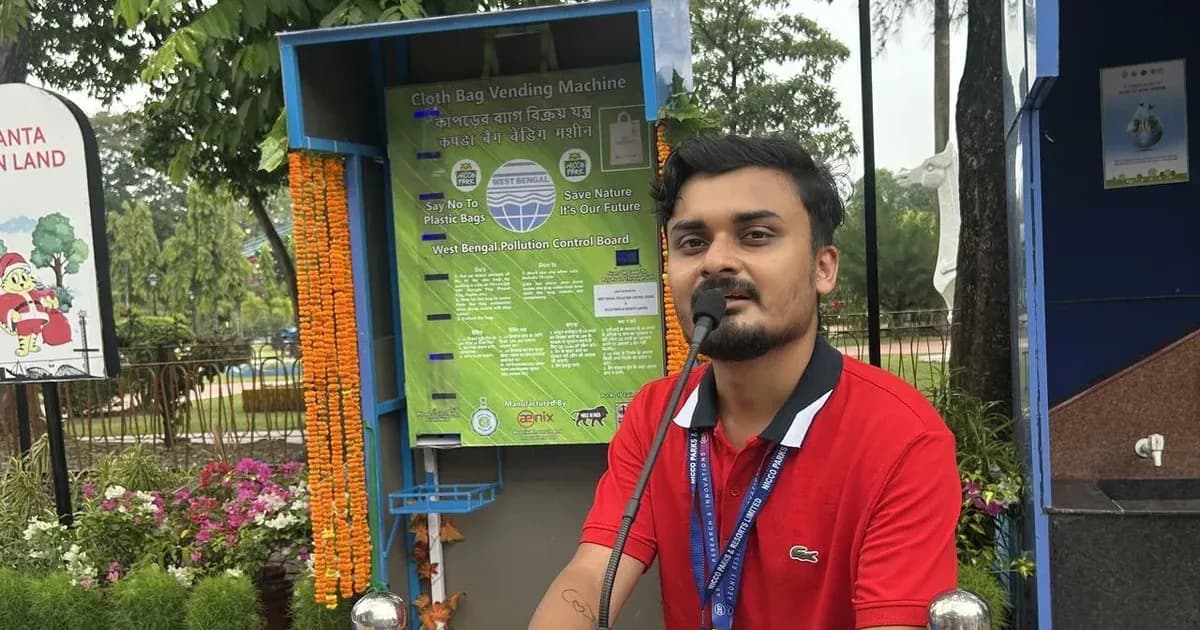
It's still running.
Same site. Same board. Same firmware (with a few OTA updates). That single deployment has taught us more about building hardware for India than any spec sheet ever did.
A few of the lessons, in case you're shipping IoT in this country:
Voltage in India is a contact sport
The "230V" you read in textbooks is fiction. We've measured 178V to 268V on the same line within a single hour. Consumer-grade SMPS dies in months. We now spec 4kV surge protection minimum, wide-input SMPS (90-305V), and ESP32 brownout detection at 2.8V — not the default 2.43V. If your hardware doesn't survive the power, nothing else matters.
GSM doesn't drop. It flickers
Our deployment data shows 8-12 connectivity micro-drops per day in tier-2 cities. Not full outages — just gaps long enough to fail a transaction if your firmware assumes a clean network. We learned to queue every transaction locally, retry on a backoff, and reconcile asynchronously when the network returns.
Someone will try to break in. Plan for month 3
Public deployment hardware faces tampering attempts on a predictable curve — first attempt usually around day 60-90. Our cabinet is on its third design iteration: tamper-evident screws, internal accelerometer for shock detection, and an SMS alert the moment the door's opened off-schedule. Boring engineering. Stops 90% of attempts.
Monsoon kills more deployments than heat
We over-engineered for 50°C operation. The actual killer was humidity creeping into the PCB through tiny seal gaps. IP65 housing, conformal coating on every board, and a silica gel cartridge that the field team replaces during quarterly maintenance. None of this is exciting. All of it is necessary.
UPI integration on 2G GSM is a different beast
Most of our deployments rely on 2G fallback for connectivity. UPI requires reliable round-trips. We had to architect for graceful degradation — local transaction queuing, retry logic, and a reconciliation layer that reaches out asynchronously. Worked through 3 payment gateway partners before finding one whose timeout settings matched field reality.
Three years later, that first machine in WB is still dispensing bags every day.
Building IoT for India ≠ building IoT for the lab.
If you're working on IoT hardware that has to survive Indian conditions, happy to compare notes — drop me a DM.
How we build IoT and embedded hardware for Indian conditions →
Case study: 500+ IoT vending machines for three Pollution Control Boards →
Originally published on LinkedIn. Read the comments there →