
Most municipal waste collection in India runs on fixed schedules. Trucks show up at fixed times, regardless of whether the bin is 10% full or 90% full. Driver hours, fuel, vehicle wear, traffic congestion, emissions — all spent on bins that didn't need emptying yet.
The math gets ugly fast.
A typical city runs hundreds of collection trips per day across its bins. A meaningful percentage of those trips are wasted — picking up bins that were nowhere near full. Multiply across cities, across years, across India. The number gets uncomfortable.
So we built a solar-powered IoT compactor bin to fix it.
Two things happen at the bin level:
Compaction buys time
Trash inside the bin gets compressed automatically — same physical bin holds 5-8x more waste before it actually fills up. Fewer fill events means fewer collection trips needed.
Fill-level telemetry kills guesswork
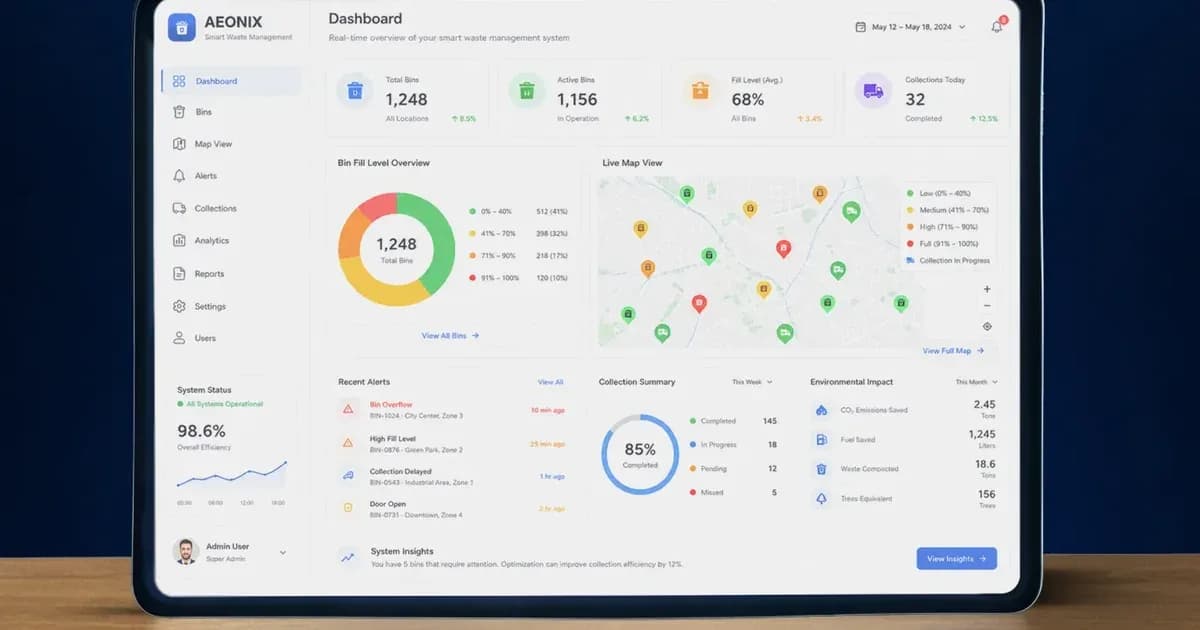
The bin tells the city when it's actually full. Collection trucks only get dispatched when there's something to collect. The route gets optimized in real time.
Net effect on operations
- Collection trips drop by an estimated 70-80% per bin.
- Fuel and labor cost per location drops in proportion.
- Overflow incidents — the kind that show up as photos on social media — drop because no bin sits forgotten.
The whole thing runs off-grid on solar. No trenching, no electrical permits, no municipal wiring. The bin is its own power source, its own data source, and its own decision-maker about when it needs attention.
What this build clarified
- Smart city ROI usually doesn't come from fancy AI. It comes from killing waste in operational workflows that no one was measuring.
- The bin isn't really the product. The product is the routing intelligence that the bin enables. Hardware is the entry point.
- Solar + IoT + compaction has to be engineered as one system. Bolting a sensor onto a regular bin doesn't get you 70% truck reduction. We learned this the hard way (more on that in another post).
If your municipality, campus, mall, or facility is spending more on garbage collection than it should — happy to talk through the numbers.
See the Solar-Powered IoT Compactor Bin →
Originally published on LinkedIn. Read the comments there →